Everyone wants a reading nook, and every Pinterest board is proof: endless reading nook ideas, a cane chair angled just so, a stack of books, a throw draped with studied carelessness. The trouble is most of these corners get built once, photographed once, and then quietly collect dust while the actual reading happens on the bed, slumped sideways, phone within reach.
A corner that looks good in a photo and a corner you return to every evening are not the same project. If your last attempt turned into a spot where laundry waits to be folded, that’s not a failure of taste. It usually means the corner, the seat, or the light wasn’t right for how you actually read. The ideas below are built around that gap, scaled to 1BHK and 2BHK apartments, real budgets, and the kind of monsoon evening that actually makes you want to sit down with a book.
Jump to the section you need:
- Choosing the Right Corner in a 1BHK or 2BHK
- The Chair or Floor Seating That Actually Gets Used
- Lighting That Makes a Reading Nook Worth Sitting In
- The Side Table or Tray You’ll Actually Use
- Adding Texture With Throws and Cushions
- Making Reading Nook Ideas Part of Your Daily Routine
Choosing the Right Corner in a 1BHK or 2BHK
Most reading nook ideas fail before the chair even arrives, because the corner was chosen for how it looked, not how it behaved. A reading nook needs two things a living room centerpiece doesn’t: natural light for most of the day and low foot traffic. In a 1BHK, that’s often the end of the balcony, past the drying rack, where the afternoon sun doesn’t glare directly on a page. In a 2BHK, it might be the dead space beside a bedroom window, or the awkward L in the living room nobody quite knows what to do with.
Before you commit, sit in the spot you’re considering for ten minutes with an actual book. Notice whether someone has to squeeze past you to reach the kitchen, whether the ceiling fan drafts straight onto the page, whether the light turns harsh by 4 pm. A corner that passes this test is worth building around. Most setups that fall apart within a month skipped this step entirely and went straight to buying a chair.
Window corners work especially well if you get east-facing morning light, since that’s often the only natural light a reading nook gets before the rest of the house wakes up. If your window looks straight into the neighboring building, a sheer curtain softens the view without blocking the light completely. These are the kind of adjustments that cost nothing to test before you spend a rupee on furniture.
The Chair or Floor Seating That Actually Gets Used
The seat is where most reading corners quietly go wrong. A chair that looks beautiful but offers no back support will get you for the first week and then lose to the bed every single time. If you read for more than twenty minutes at a stretch, you need something that holds your spine, not just your weight.
- A cane armchair with a cushion, good back support and it breathes in humid weather
- Floor cushions or a gaddha set, best for shorter sessions or for a window corner too narrow for a chair
- A compact accent armchair with wooden legs, worth it if the nook doubles as extra seating for guests
- A low wooden stool with a thick cushion, fits a balcony corner where a full chair won’t
If your knees complain about getting up from the floor, don’t force floor seating just because it photographs well. The best setups match the seat to your actual body, not to a mood board. A chair you can sink into for forty-five minutes beats a cushion that looks perfect for two.
If your 1BHK genuinely doesn’t have room for a dedicated chair, look at pieces that pull double duty. A folding cane chair that leans flat against the wall when not in use, or a floor cushion that doubles as extra seating when guests visit, lets the same corner work in a room that’s already doing three other jobs.
Lighting That Makes a Reading Nook Worth Sitting In
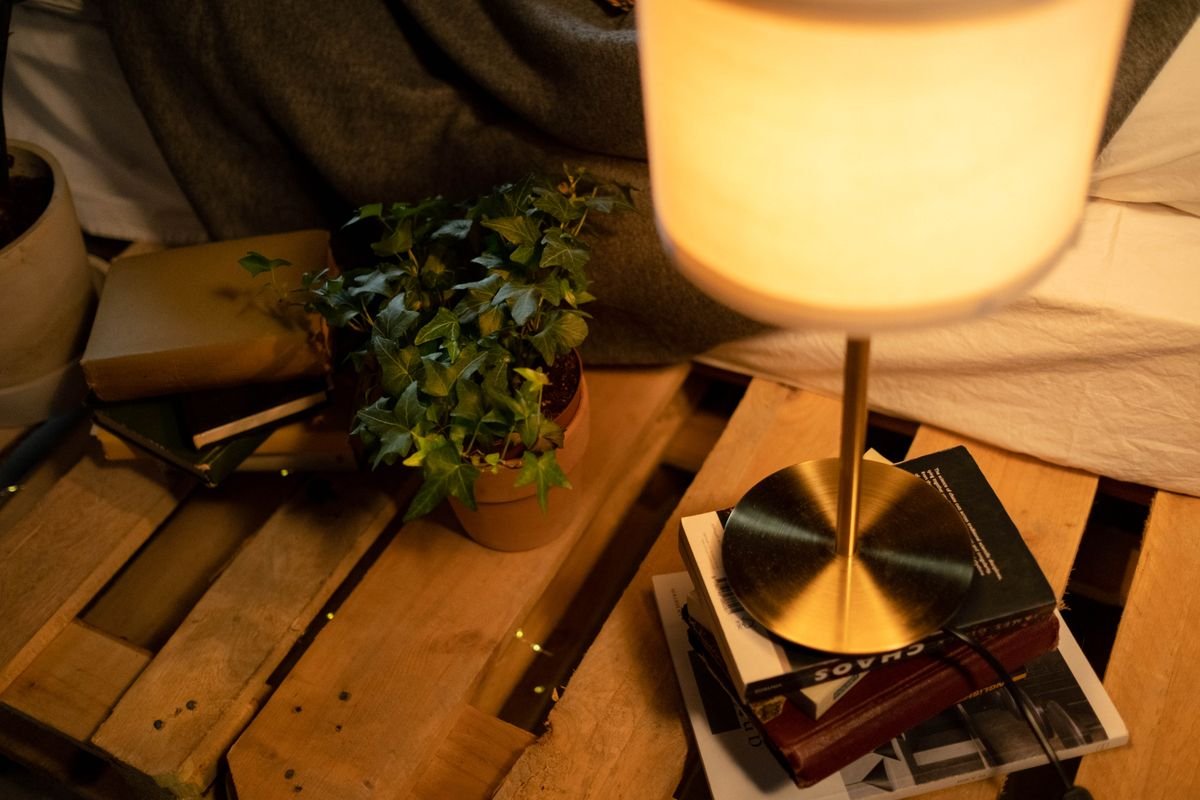
Daylight carries you until early evening, and then most nooks depend entirely on what you add. A single overhead tube light will not do it. Look for a warm LED reading lamp at 2700K, the same soft yellow-white tone you’d want in a bedroom, rather than the cool white that makes a page feel clinical. A clip-on lamp works if the nook is tight on surface space, and a small floor lamp works if there’s room beside the chair.
Fairy lights strung along a balcony grill or window frame add warmth without adding glare, and they’re inexpensive enough to treat as decoration rather than function. Architectural Digest has written at length about layering light by height and warmth, and the same principle applies to a reading nook at any size: one focused light for the page, one ambient light for the mood, nothing overhead and flat.
During monsoon, afternoons can turn dark enough that you’ll want the lamp on well before evening. Keep it within reach of the chair itself rather than mounted across the room, so switching it on doesn’t mean getting up first. Small details like this are what separate corners that survive the season from ones that only worked in April.
The Side Table or Tray You’ll Actually Use
A reading nook without a surface nearby turns into a juggling act: book in one hand, chai balanced on the floor, glasses perched on the armrest. A small wooden stool or a stoneware tray solves this without taking up real space. It only needs to hold a cup, a bookmark, and maybe a candle, so there’s no reason to go bigger than roughly 30 by 30 centimeters.
Keep this surface strictly for the nook’s job. The moment it starts holding chargers and remote controls, the whole corner stops feeling like a reading nook and starts feeling like overflow storage again. If clutter keeps creeping back into small surfaces around your home, Organizing Without the Overwhelm walks through a one-drawer-at-a-time approach that works just as well on a side table as it does on a cabinet.
A small, low-maintenance plant, something like a money plant in a compact pot, earns a place on this surface too. It doesn’t compete with the cup or the book, and it keeps the corner feeling alive even on days you don’t sit down at all. Small additions like this don’t need to be dramatic to help a reading corner feel lived-in rather than staged.
Adding Texture With Throws and Cushions
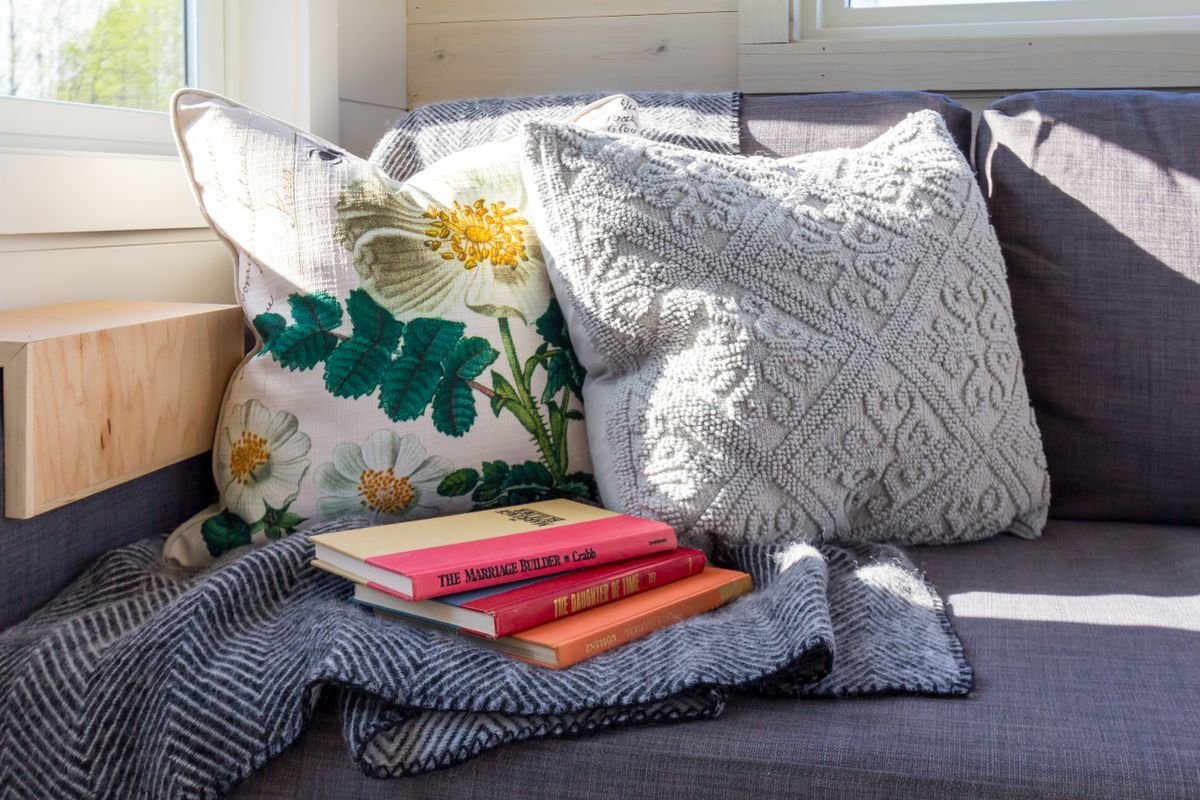
This is the part that actually makes a corner feel inviting instead of just functional. A cotton or khadi throw folded over the armrest, a block print cushion or two behind your back, a linen cushion cover in a quieter tone underneath. Natural fibers do more work here than anything synthetic; they hold warmth without feeling heavy, and they soften a cane chair or a wooden stool that would otherwise feel stiff.
Rotate the fabric with the season. A heavier khadi or cotton-wool blend throw suits monsoon evenings and winter nights, when the nook becomes the warmest-feeling corner in the house. Switch to a lighter, unlined cotton cover by March, before the heat makes anything thick unbearable. Reading nook ideas that ignore this swap tend to feel wrong for half the year.
Block print cushions in indigo or madder red read as considered rather than themed, especially against a plain cane chair or a neutral wall. If you already own block print bedding or a dupatta you love, a cushion cover made from the same fabric ties the nook to the rest of your home instead of making it feel like a separate project. Small, deliberate choices like this cost little and age well.

Making Reading Nook Ideas Part of Your Daily Routine
A corner only earns the name reading nook once it’s tied to something you already do. For most people that’s chai. Make a cup at the same time every evening and carry it straight to the chair, before you’ve decided whether you feel like reading. The habit forms around the cup, not around willpower you don’t actually have on a Tuesday.
Keep only three or four books near the nook at a time, not your entire shelf. A smaller, rotating stack is easier to choose from and easier to finish, and it keeps the corner from turning into another surface that needs organizing. Swap the stack out monthly. If you want more on choosing what stays visible in a room versus what gets stored away, Decor That Feels Like Home covers that editing instinct in more depth. Monsoon reading, in particular, deserves its own small stack, kept ready before the first rain actually arrives.

Give any new setup a week before deciding it isn’t working. Move the lamp if the light feels wrong, swap the cushion if your back still aches, shift the stool six inches if you keep knocking it with your foot. The best corners aren’t fixed on day one. They’re adjusted quietly, over a few evenings, until the corner fits you instead of the other way around.
None of this requires a renovation, a big budget, or a corner that photographs perfectly. A good reading nook calls you in at the end of the day, chai already in hand, before you’ve even decided to sit down. Start with the corner that passes the ten-minute test, add a seat that holds your back, and let the rest follow slowly.