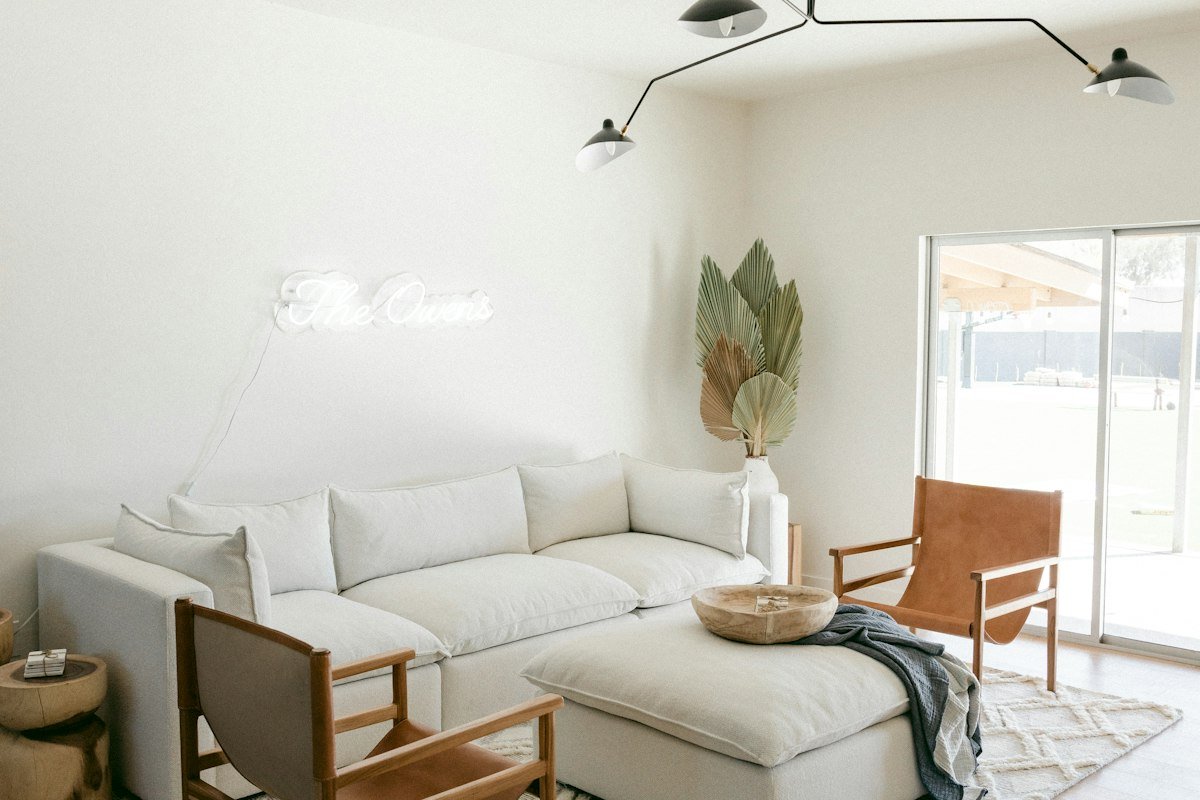
There’s a particular kind of living room that makes you exhale the moment you walk in. Nothing about it is trying too hard. The furniture has room to breathe, the light falls somewhere soft, and every object seems to have a reason for being there. That feeling isn’t an accident — it’s the result of a handful of quiet decisions, repeated consistently, over time.
If your living room currently feels more like a holding pen for everything you own than a place you actually want to sit, this guide is for you. None of it requires a renovation or a big budget. It just asks you to be a little more intentional about what stays and what goes.
Start With What You Actually Use
Before you buy a single new thing, sit in your living room for a week and pay attention. Which chair do you actually sink into? Which surface collects clutter within a day of being cleared? Which side table has become a junk drawer with legs? A calm room isn’t built from scratch — it’s edited out of the room you already have.
Remove anything that doesn’t serve the two or three things a living room needs to do well: seating, conversation, and rest. If a piece doesn’t support one of those, it’s probably the thing making the room feel busy.
Choose Furniture With Room Around It
One of the fastest ways to make a room feel calm is to stop pushing furniture against every wall. A little negative space around a sofa or an armchair does more for the feeling of a room than almost any decorating trick. If your space allows it, pull seating slightly away from the walls and let the room have some air.
When you’re choosing new furniture, look for pieces with visible legs rather than upholstery that runs to the floor. A sofa or chair that you can see a sliver of floor beneath will almost always read as lighter and more considered than one that sits like a block.
A Few Materials Worth Prioritizing
- Natural wood in warm, honest tones — oak, walnut, ash — rather than anything trying to look like wood
- Linen or boucle upholstery, which softens a room instantly compared to synthetic blends
- Woven natural fiber rugs like jute or wool, which ground a space without competing for attention
- Unlacquered brass or matte black hardware, used sparingly, for a touch of warmth
Commit to a Narrow Color Palette
Color is where a lot of living rooms lose their calm. It’s tempting to bring in a new hue with every throw pillow or piece of art, but a room reads as restful when it’s built around two or three tones, not eight. Start with a warm neutral base — cream, sand, soft plaster — and add one grounding tone, like olive, rust, or deep brown, through textiles and a couple of accent pieces.
If you love color, let it show up in one place with confidence — a single piece of art, a set of ceramic vases, a stack of books — rather than scattering small hits of it everywhere. One considered moment of color reads as intentional. Five scattered ones read as noise.
Let Lighting Do More of the Work
Overhead lighting is the fastest way to flatten a room and make it feel sterile. A living room that breathes usually has three or four light sources at different heights — a floor lamp in a reading corner, a table lamp with a warm linen or paper shade, maybe a low pendant over a side table. Layered, low lighting creates pockets of warmth instead of one flat wash of brightness.
Pay attention to bulb temperature too. A warm 2700K bulb will make a neutral room feel inviting in the evening in a way a cool white bulb never will.
Decluttering Isn’t a One-Time Event
The living room is usually the first room to collect the day’s overflow — mail, chargers, half-read books, a jacket that never made it to the closet. A calm room stays calm because there’s a rhythm to resetting it, not because clutter never happens.
Give every category of object a home before you try to keep the room tidy. A shallow woven basket near the sofa for blankets. A small tray on the console for keys and mail. A closed cabinet, rather than open shelving, for anything you don’t want on permanent display. When everything has a place, putting it away takes seconds instead of becoming a project.
Leave Room for Stillness
It’s worth saying plainly: not every surface needs something on it. A coffee table with a single tray, a candle, and a small stack of books will always feel more considered than one styled with six objects competing for attention. The same goes for walls — one well-chosen piece of art with space around it says more than a gallery wall crammed edge to edge.
A living room that breathes isn’t a finished, static thing. It’s a room you keep gently editing — fewer things, chosen more carefully, given a little more space than feels strictly necessary. Start with one corner this week. The rest tends to follow.