Of all the rooms in a home, the bedroom is the one most quietly shaped by habit. We tend to decorate it last and notice it least, even though it’s where we spend roughly a third of our lives. A bedroom that’s genuinely designed for rest — not just for looking nice in photos — tends to share a few things in common: it’s uncluttered, it’s dim in the right way, and it holds almost nothing that isn’t directly related to sleep.
If your bedroom has slowly become a second office, a laundry overflow zone, or just a place where things land, here’s how to bring it back to what it’s actually for.
Start With the Bedding
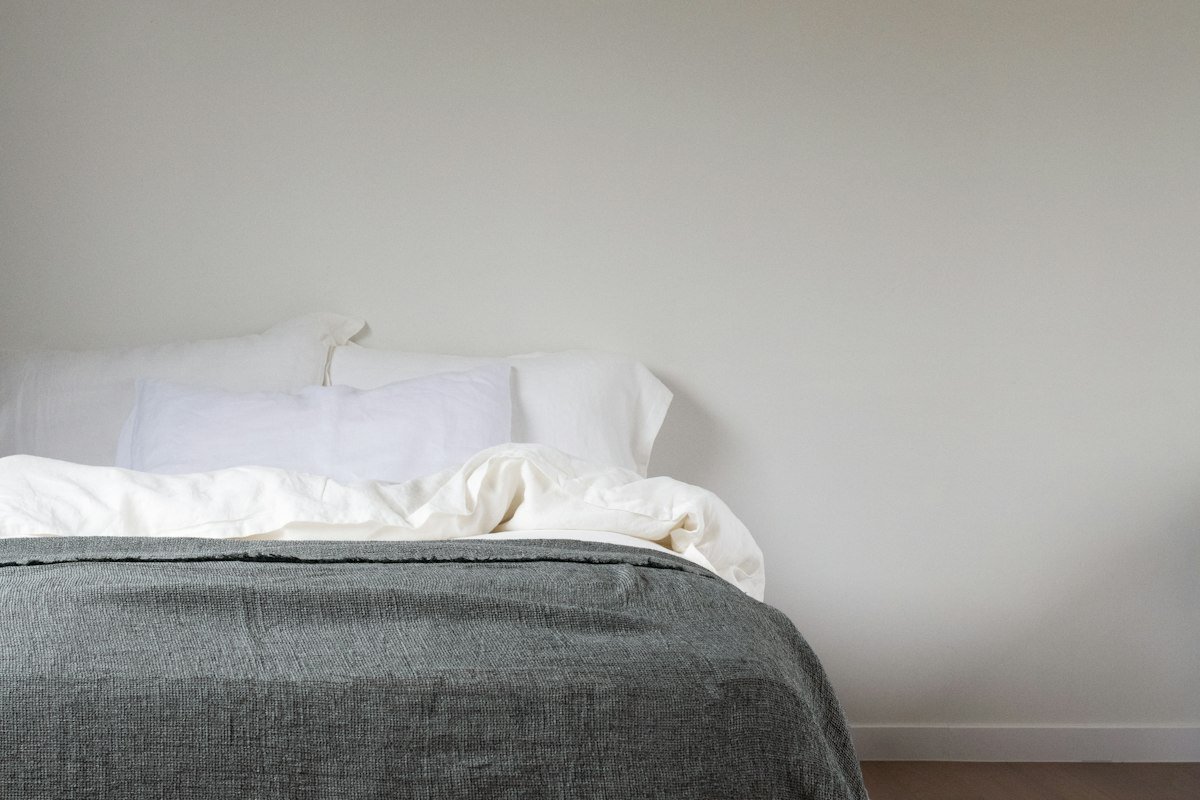
Nothing changes the feel of a bedroom faster than what’s actually on the bed. Linen bedding, in particular, does something that cotton-polyester blends rarely manage — it looks intentionally undone. A slightly rumpled linen duvet reads as relaxed and lived-in rather than messy, which takes a lot of the daily pressure off making the bed look perfect.
Beyond the look of it, linen is genuinely better for sleep — breathable in summer, warm in winter, and it softens with every wash instead of wearing thin. If you’re switching over, a duvet cover and a set of pillowcases in a warm, neutral tone (oat, clay, soft sage) will do more for the room than any piece of wall art.
Rethink Your Lighting Completely
A single overhead light is almost never the right choice for a bedroom. Bright, even light works against the exact thing you’re trying to do in this room, which is wind down. Aim instead for two or three soft sources: a bedside lamp on each side of the bed, ideally with a warm, low-wattage bulb, and maybe a small plug-in wall sconce or a dimmable floor lamp in a reading corner.
If you read in bed, a lamp with an adjustable arm or shade angle makes a real difference — light directed at your book rather than the whole ceiling keeps the rest of the room dim and sleep-ready even while you’re still awake.
A Few Lighting Notes Worth Remembering
- Choose bulbs around 2700K — anything cooler starts to feel clinical after dark
- Put bedside lamps on a smart plug or dimmer if you can, so the last light of the night is the dimmest
- Keep phone chargers away from the lamp itself, so charging doesn’t mean staring at a bright screen right before bed
Declutter the Nightstands First
If you only reset one surface in the whole bedroom, make it the nightstand. This is the spot that silently accumulates the most — old water glasses, a tangle of cables, half-finished books, hand cream, receipts. A cluttered nightstand is often the last thing you see before sleep and the first thing you see after waking, so it has an outsized effect on how the whole room feels.
Aim for no more than three or four objects on each side: a lamp, the book you’re currently reading, a small tray or dish for rings and watches, and maybe a carafe of water. Anything else — chargers, lotions, loose papers — belongs in a drawer, not on the surface.
Let the Palette Go Quiet
Bedrooms benefit more than almost any other room from a narrow, muted color palette. Save the bold colors and busy patterns for a room you pass through — a bedroom is a room you’re meant to settle into. Warm neutrals, soft greens, and dusty clay tones tend to feel more restful at night than anything bright or high-contrast, especially once the lights are low.
If you love pattern, let it show up in one place — a woven throw at the foot of the bed, or a single piece of textile art — rather than across curtains, rugs, and bedding all at once.
Take Work Out of the Room
If there’s a desk, a laptop, or a stack of work papers living in your bedroom, it’s worth being honest about what that does to the room’s purpose. Even when you’re not actively working, a desk in the corner sends a quiet signal to your brain that this space is for doing, not resting. If you can move work elsewhere — even into a closet nook or a corner of another room — the bedroom tends to feel more restful almost immediately, without a single decor change.
Add One Thing That Isn’t Functional
Once the essentials are sorted, it’s worth adding one purely pleasant thing — a small vase with a single stem, a scented candle you actually love, a piece of art that has nothing to do with productivity or sleep hygiene. A restful room isn’t only about removing what doesn’t belong; it’s also about leaving a little room for something that’s simply nice to look at before you turn out the light.