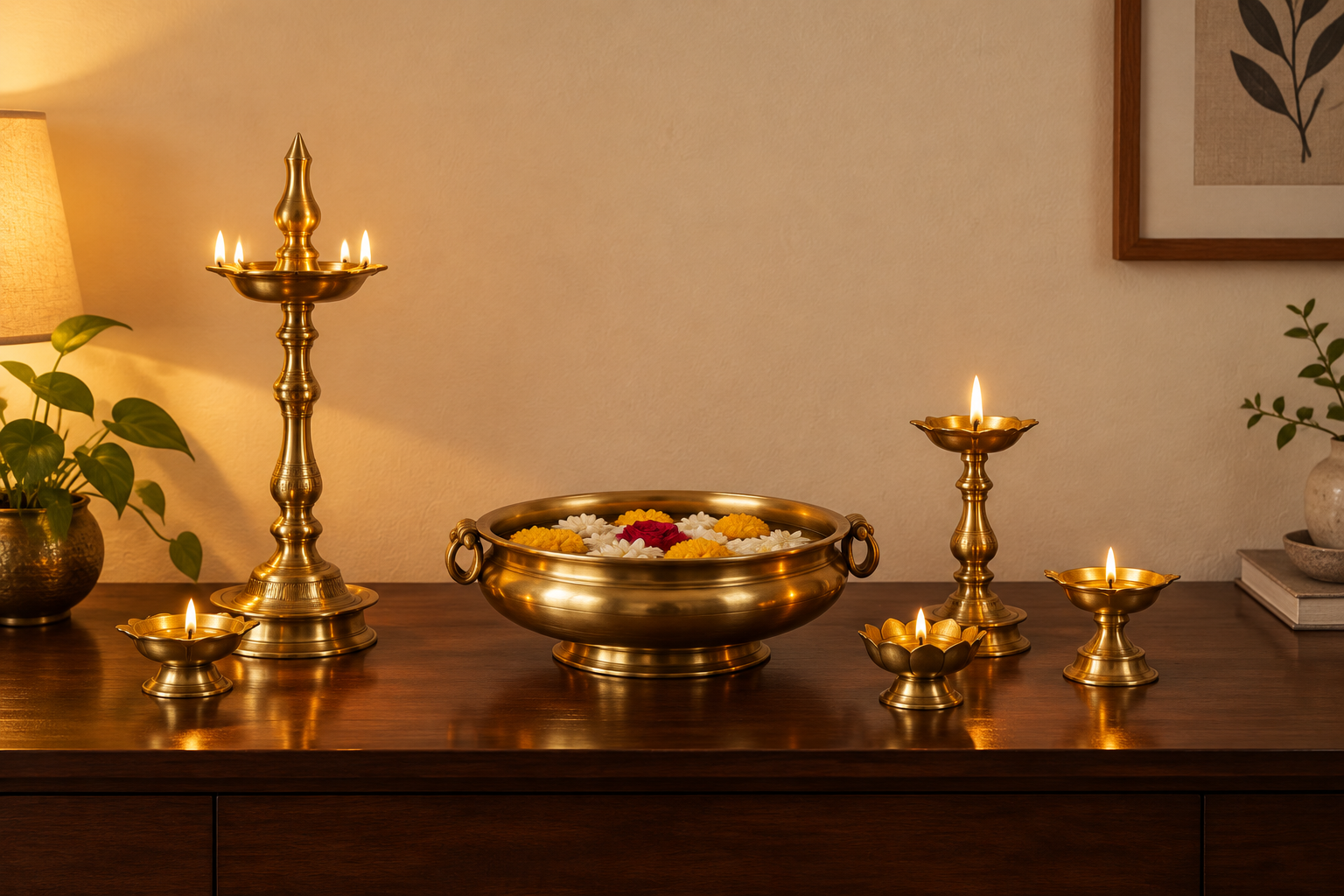
Most of us buy brass diyas and urlis in the weeks before Diwali, light them for five nights, and then wrap them in newspaper until next year. It is a shame, because brass has exactly the quality a small Indian home needs on an ordinary evening: it catches low light, warms up a plain shelf, and gets better with age. This list is about the pieces that earn a permanent place on your console, windowsill or pooja shelf, long after the festival lights come down.
In this Article
- The Diya That Doubles as a Small Sculpture
- The One You Fill with Flowers and Floating Lights
- The Set That Turns a Bare Shelf into an Evening Ritual
- The Tall One for Corners That Feel Empty
- The Quiet Stand for Morning Dhoop
- The Softer Glow for Days Without a Festival
- The Small Gift-Worthy Piece with Real Presence
- The Calm Figure for a Workspace or Bedside
A quick note on how to use this list. You do not need all eight. In a 1BHK, two or three well-placed pieces do more than a crowded shelf ever will. Pick the one that matches the corner you keep meaning to fix. The key is to think of brass as functional decor, not seasonal decor. A diya that lights your evening chai is not a Diwali prop. It is simply part of how your home works.
The Diya That Doubles as a Small Sculpture
Some diyas look like tools. Others look like objects you would keep even without a flame. The brass peacock diya belongs to the second group, with a carved bird at the back and a shallow oil cup in front. Lit, it throws a small moving shadow on the wall behind it. Unlit, it sits on a shelf like a piece of folk art.
Place it on a dark wooden surface or against a plain white wall, where the carving can be read clearly. Use a cotton wick and a little sesame or ghee for a clean, steady flame. Wipe the brass with a soft cloth after each use so the oil does not leave a film.
The One You Fill with Flowers and Floating Lights
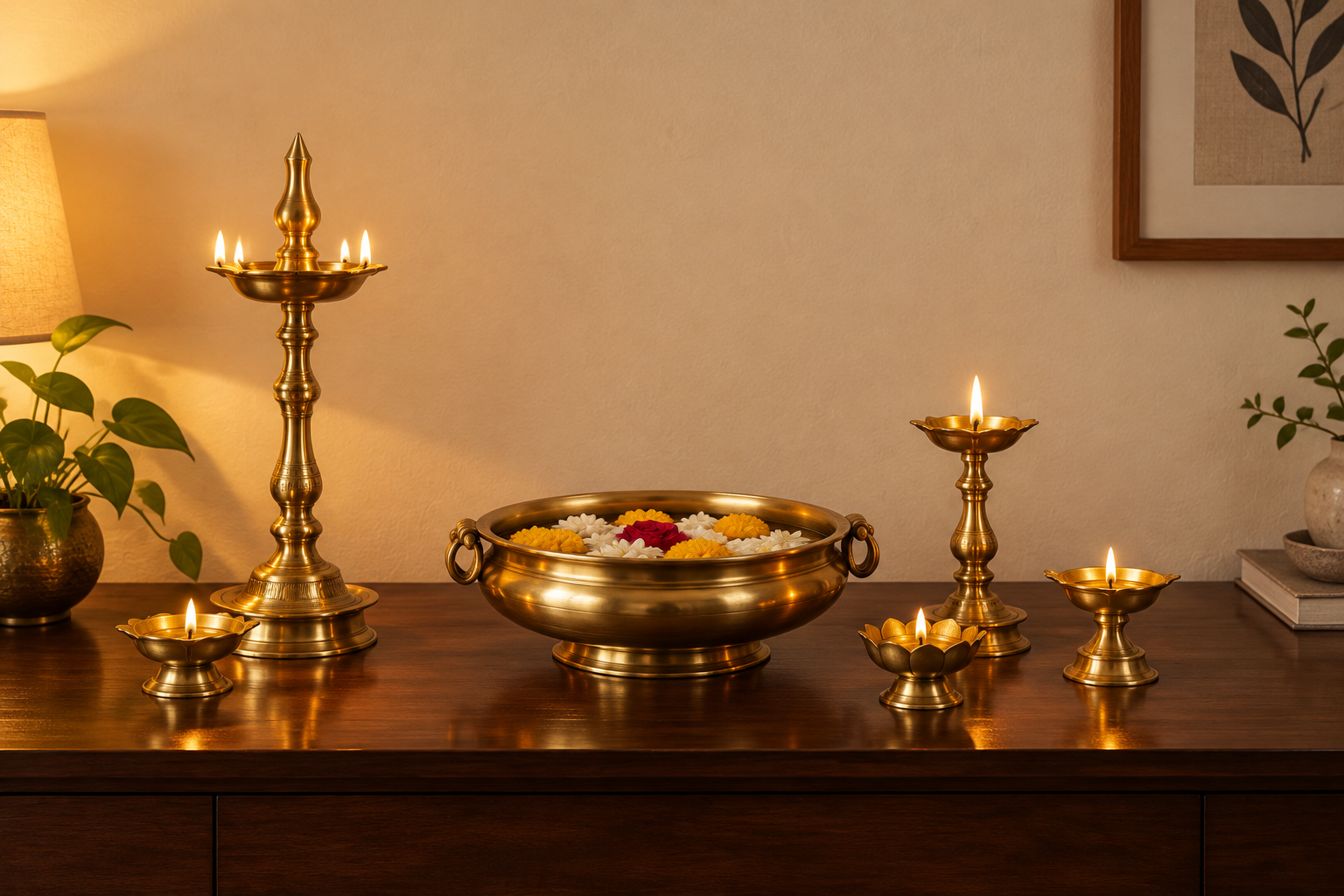
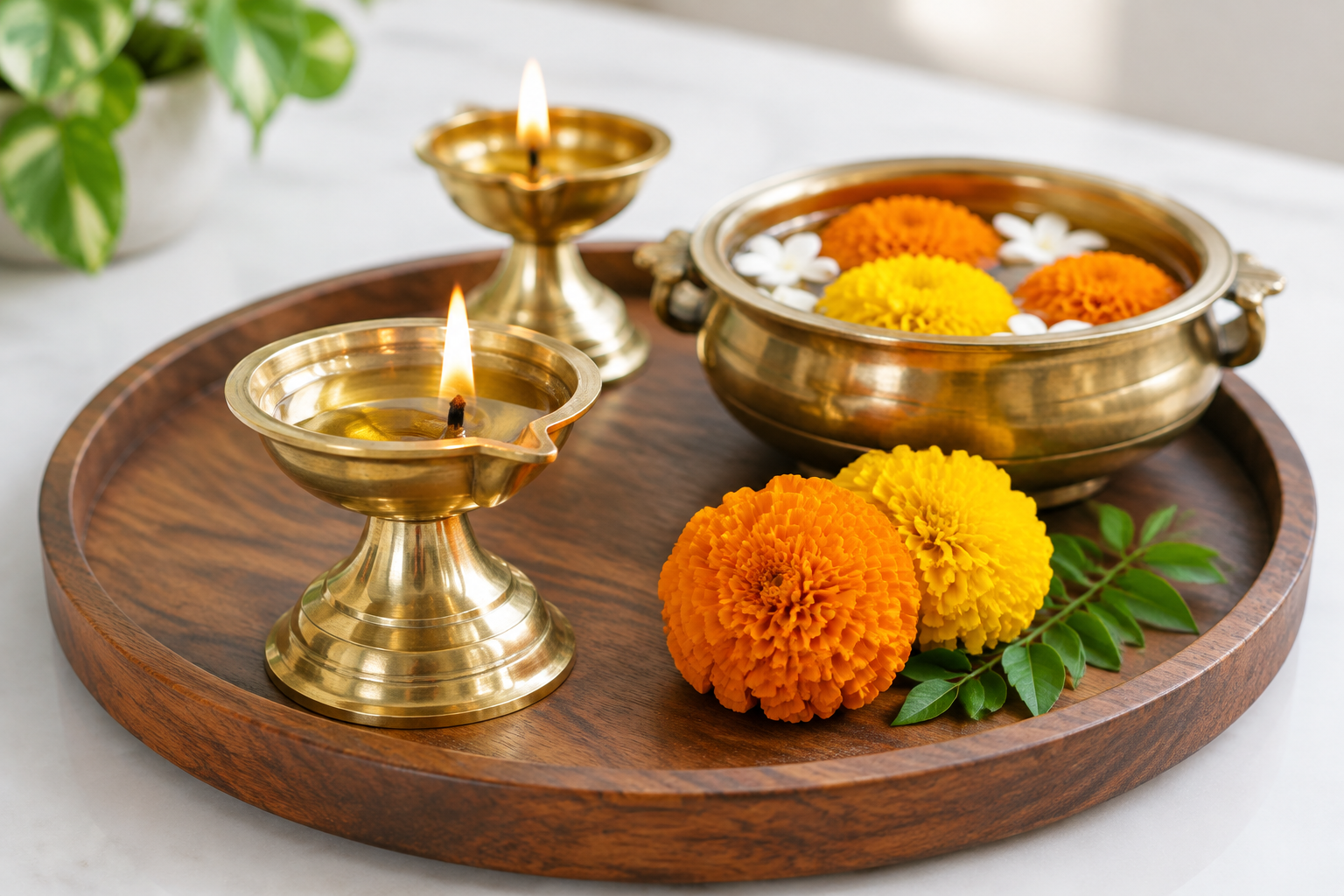
A wide, shallow urli is the most forgiving piece in this whole group. The brass urli bowl works in three seasons of the year without changing at all. Fill it with water, marigold heads and two floating wicks for Diwali. Fill it with jasmine for a wedding-season entryway. Leave it with just water and a few rose petals on a regular weekday.
Because brass urli decoration is mostly about the surface of the water, the bowl does best on a low table where you can look down into it. A coffee table, a stool by the door or the floor beside a sofa all work. Change the water every day or two so the flowers stay fresh.
The Set That Turns a Bare Shelf into an Evening Ritual
If you only add one thing to a shelf, make it a small group of lights. A brass tealight holder set gives you several matching pieces that you can arrange in a loose cluster. Odd numbers look more natural, so try three or five together, with a little variation in height if the set allows it.
These are useful in a rented flat because they need no drilling and no wiring. Put them on a tray about 30 cm wide to keep the group contained and to protect the surface from wax. Light them when you sit down with chai, and the room shifts from a place you pass through to a place you stay in.
The Tall One for Corners That Feel Empty
Every home has one corner that looks unfinished: beside the TV unit, next to the balcony door, at the end of a hallway. A metal pillar candle holder stand adds height without taking floor space, which matters when the room is already compact. It reads as furniture rather than decor, and it pairs well with brass pieces because the metals sit comfortably together.
Choose an unscented pillar candle in ivory or warm white so the stand stays the focus. Keep it away from curtains and fans, and trim the wick to a few millimetres before each use. A candle that burns evenly also lasts noticeably longer.
The Quiet Stand for Morning Dhoop
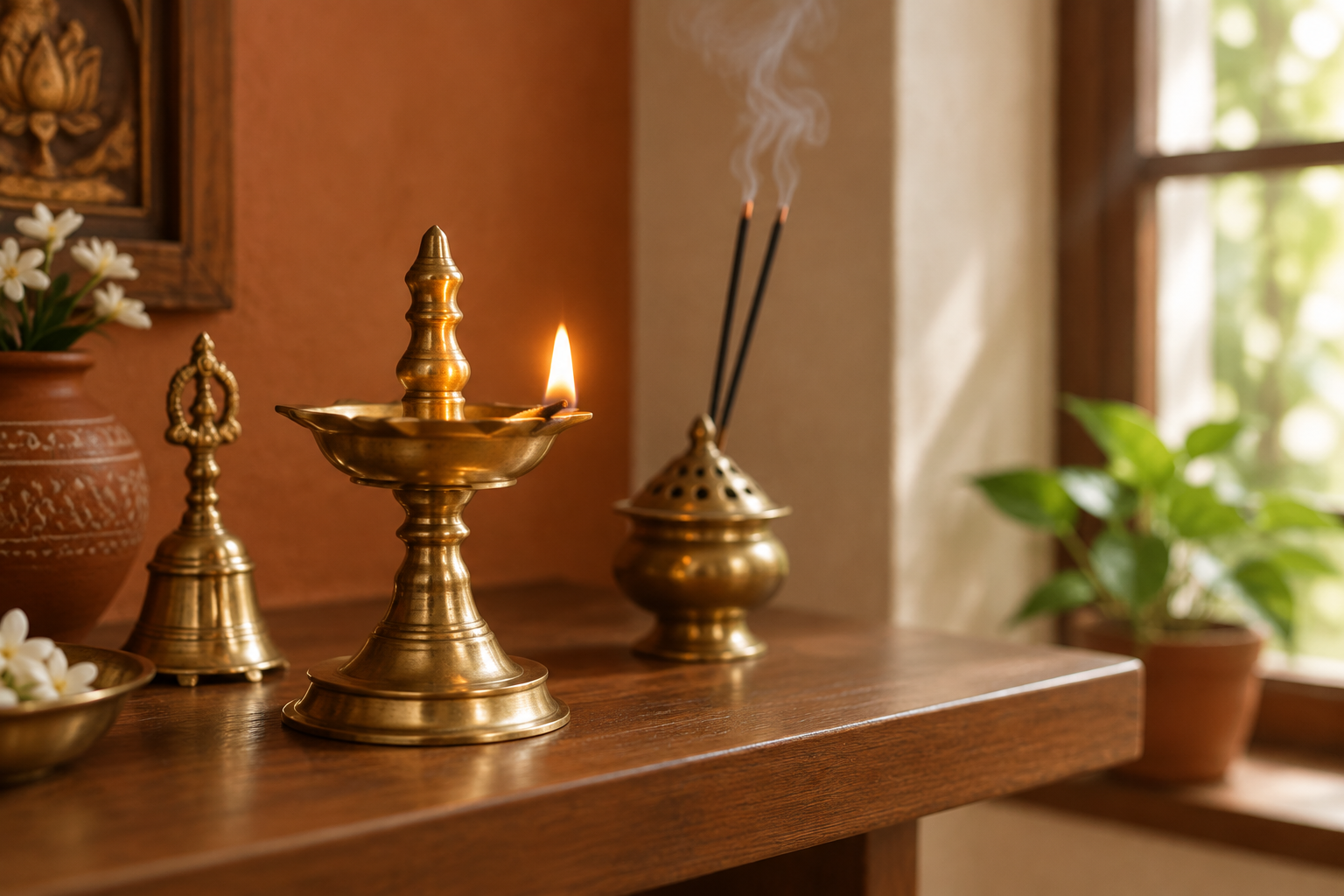
Loose incense ash ends up on shelves, on books and inside drawers unless you give it somewhere to land. A wooden dhoop stand is a practical answer, and the warm timber is a good partner for brass. The two materials together look settled, like something that has always been in the house.
Keep it near the pooja area, or by a window where the smoke can drift outside. If you are setting up a compact prayer space, our guide to small pooja room ideas covers how to arrange a stand, a lamp and a few offerings without crowding a single shelf.
The Softer Glow for Days Without a Festival
Oil lamps carry meaning, and that is exactly why you might not want to light one every night. For quiet evenings, a scented soy candle set fills the gap. Soy burns cleaner and more slowly than paraffin, and a gentle fragrance such as sandalwood, vanilla or lavender suits a bedroom or reading corner.
Here is a small trick. Place a soy candle inside the brass tealight holders or beside your urli, and you get the look of tradition with the ease of an everyday habit. Let each candle burn long enough to melt the full surface on the first use, usually about two hours, so it does not tunnel down the middle.
The Small Gift-Worthy Piece with Real Presence
Housewarming gifts are hard. You want something thoughtful, not another vase. A pure silver plated elephant murti sits comfortably in that space. It is small enough for a bookshelf or a bedside table, and the cool silver tone gives a pleasant contrast when placed beside warm brass.
Elephants are widely associated with good fortune in Indian homes, so the piece carries meaning without feeling heavy. Keep it away from humid spots like the kitchen counter, and polish it gently with a dry microfibre cloth. If you are choosing something for Diwali, our Diwali gift ideas for home has more pieces in the same spirit.
The Calm Figure for a Workspace or Bedside
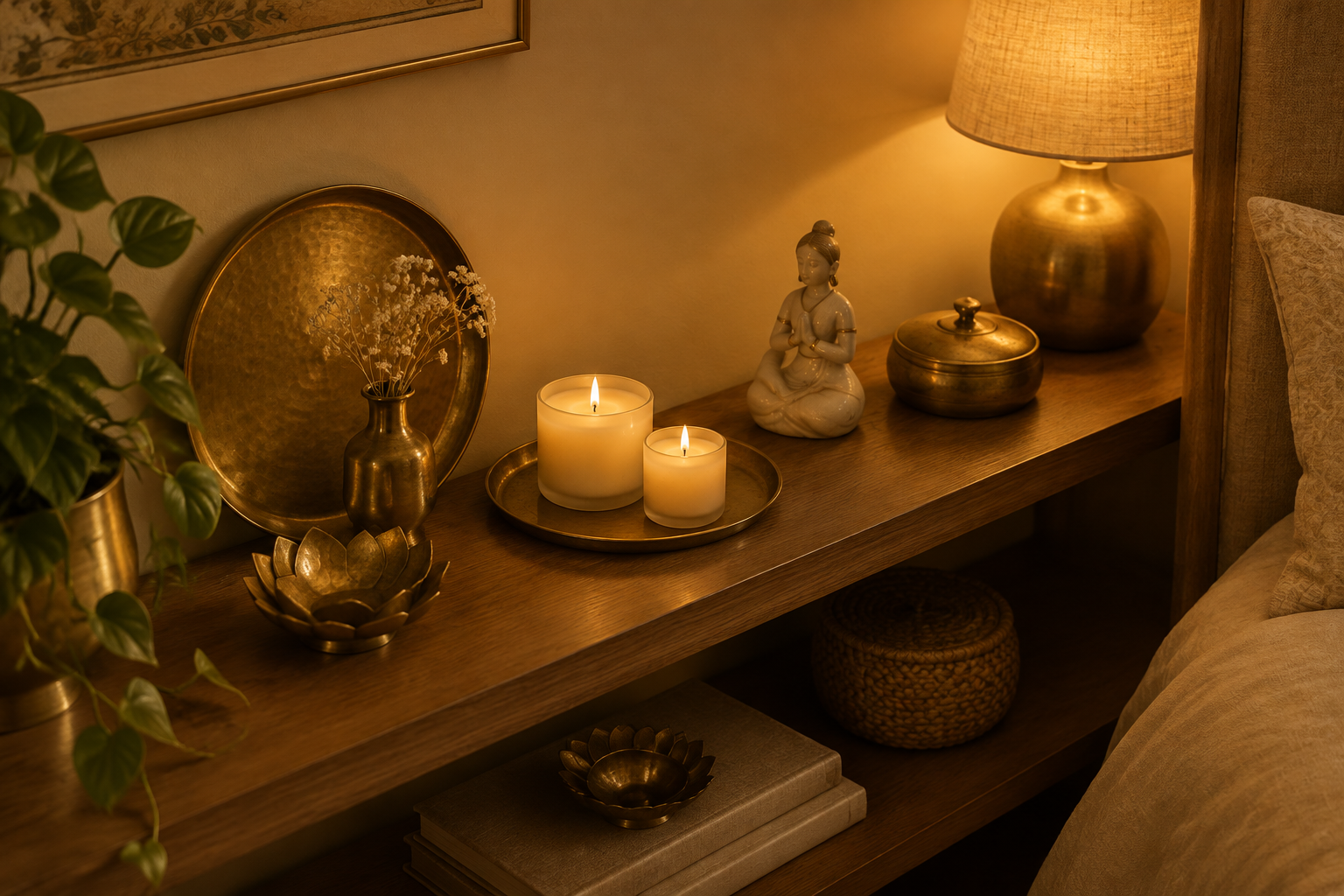
Work-from-home corners tend to collect cables, chargers and paper. A sitting Buddha showpiece gives the desk one still point to look at between meetings. The figure does not need to be large; a palm-sized piece is enough to change how the surface feels.
Place it at eye level when you are seated, not high on a shelf. Leave a little empty space around it, about the width of your hand on each side. That breathing room is what makes a small object look deliberate rather than leftover.
One of the best things about building a small brass collection is how the pieces work together. A peacock diya beside an urli on the dining table, tealight holders on a tray near the sofa, and a dhoop stand on the pooja shelf. Each corner gets its own character, but the material ties them into a single, quiet mood. You are not matching things to a theme. You are just letting brass do what it does naturally, which is hold light and age gracefully.
Caring for Your Brass Diyas and Urlis
Brass darkens with time, and some people love that patina. If you prefer a bright finish, the old kitchen method still works: rub the surface with half a lemon dipped in a little salt or tamarind paste, leave it for a few minutes, rinse with warm water and dry completely. Do not leave brass wet, as water spots are harder to remove than tarnish. If a piece has deep engraving, use a soft toothbrush to reach the grooves without scratching the flat surfaces.
- Wipe oil and wax residue while the piece is still slightly warm.
- Store lamps with a sheet of soft tissue, not newspaper, which can stain.
- Avoid harsh scrubbers; a soft cloth and patience do the work.
- Keep brass away from damp walls during monsoon.
The tradition of the diya is old and well documented; if you are curious about its history and regional forms, the Wikipedia entry on the diya is a good place to start.
Keeping the Glow After the Festival
Good brass diyas and urlis do not belong to a single week. They belong on the shelf where you leave your keys, on the table where you drink your first chai, in the corner that needs a little warmth. Start with one piece, use it often, and add the next when you notice a gap. Over a few years, you will have a collection that feels inherited rather than bought.
If you are planning festive styling too, our piece on Diwali home decor that feels warm, not overdone shows how these same pieces can slot into a larger seasonal look.