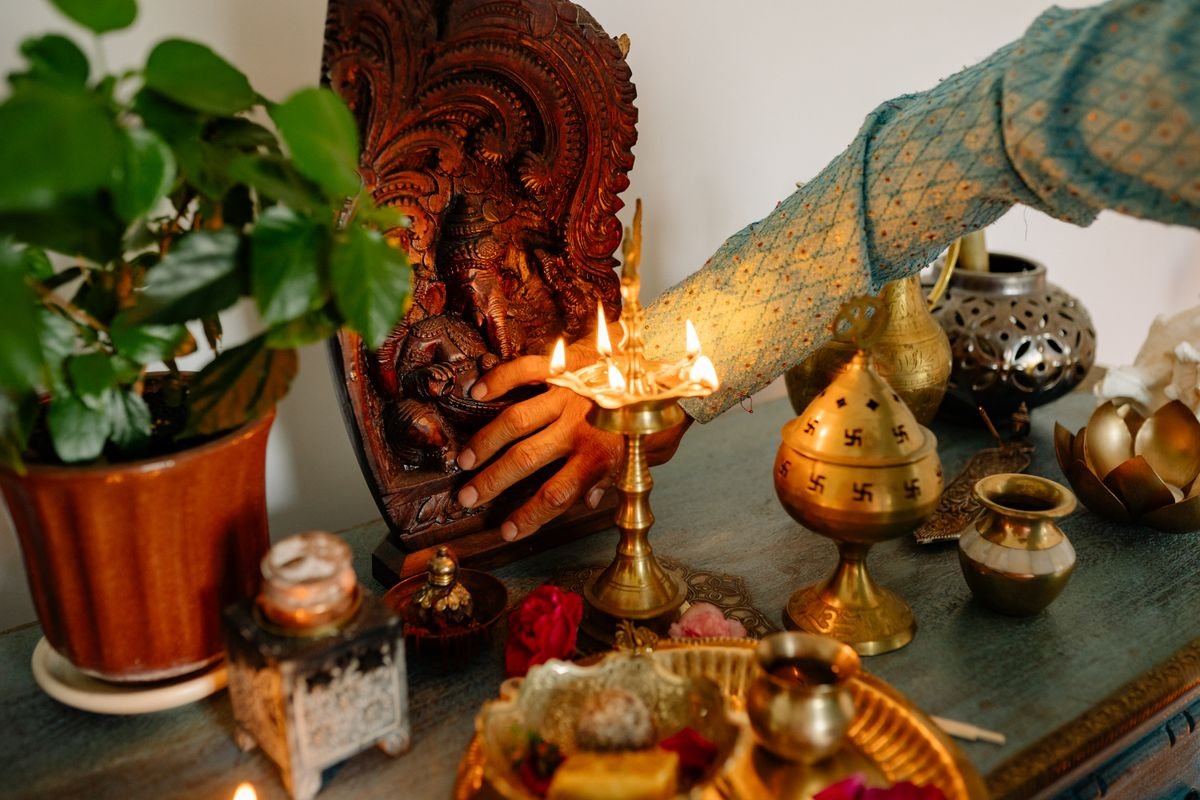
Not every home has room for a dedicated pooja room, and most small pooja room ideas start from exactly that limitation: a corner, a shelf, a wall niche that isn’t being used for anything else. If you’ve moved into a 1BHK or 2BHK in a city like Bangalore, Pune, or Mumbai, chances are the pooja space has to share square footage with everything else you own, and that’s a normal starting point, not a compromise to apologize for.
What matters isn’t square footage. It’s whether the space feels sacred and considered when you sit in front of it each morning, rather than cramped under a stack of things that drifted there because nowhere else wanted them. A small pooja corner, set up with intention, does more for your daily practice than a large one treated as an afterthought. Here’s how to build one that actually fits your home.
In This Article
- Start With the Right Corner
- The Shelf or Platform
- Brass and Silver Accents
- Lighting the Space
- Keeping It Uncluttered
- Making It Modern Without Losing Meaning
- A Good Time to Start
Small Pooja Room Ideas You Can Actually Use
None of what follows requires construction work or a big budget. These are small pooja room ideas built around a single shelf, a corner, or a repurposed niche, the kind of space most apartments already have without anyone noticing it.
Start With the Right Corner
Before you buy anything, walk through your home and look for a spot that’s already quiet: a corner no one really cuts through, a wall niche that’s sat empty since you moved in, or a shelf above eye level in the living room. That spot is your starting point.
Vastu Shastra traditionally favors the northeast corner of a home for a pooja space, and it’s worth aiming for if your layout allows it. But in a rented 1BHK or a flat you didn’t design from scratch, the northeast corner might already be a kitchen wall or someone else’s window. In that case, a calm, uncluttered corner matters more than hitting the exact direction. Livspace’s guide to pooja room vastu is a useful reference if you want to go deeper on placement and direction.
Living room corners get more daily light and foot traffic, which suits a quick diya before the day starts. A bedroom corner feels more private, better suited to a slower, quieter practice. Either can work. Pick the one that matches how you actually pray, not how you think you should.
It also helps to think about who else uses the space. In a joint household, a corner near the main living area means parents or in-laws can take part in a morning aarti without walking through a bedroom. If you live alone or with a partner, a bedroom corner might be the more honest choice, since it’s the space you’ll actually sit in front of most days.
The Shelf or Platform
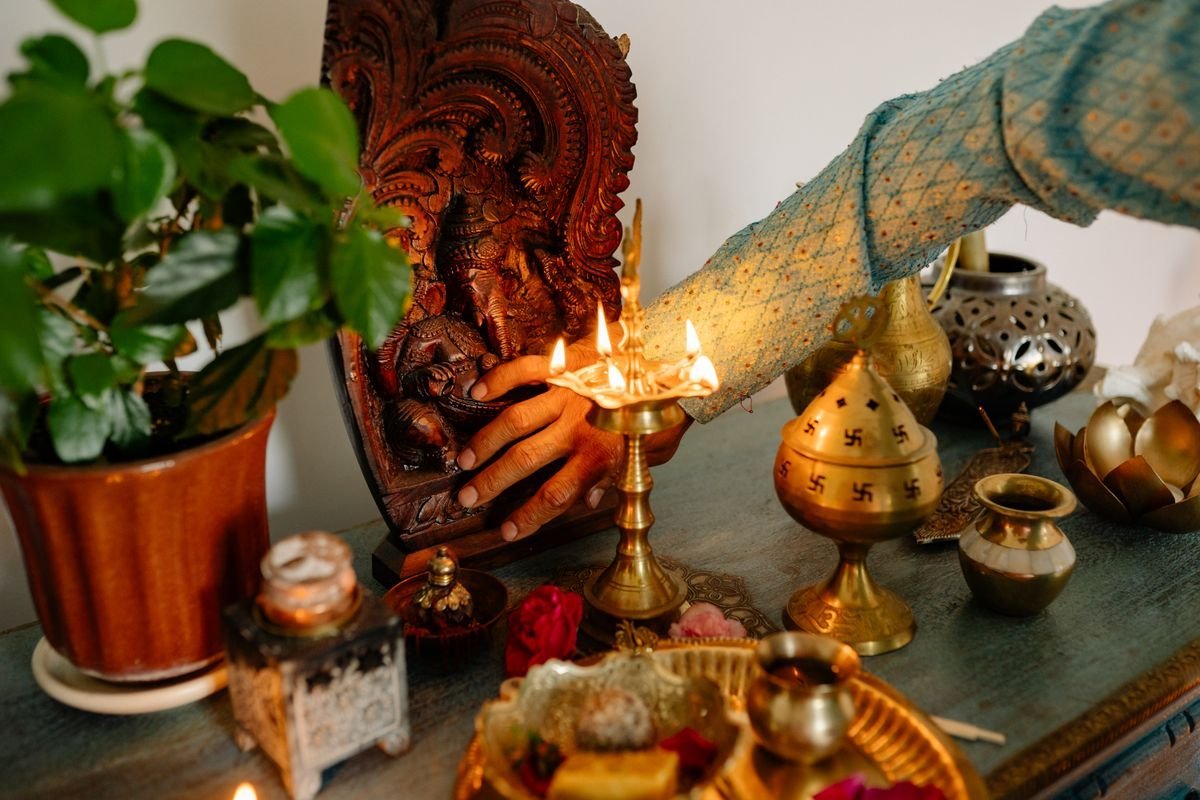
Once you’ve chosen your corner, you need something to set things on. The simplest option is a solid wood floating shelf, the kind you’d use anywhere else in the house, mounted at a height you can comfortably reach to light a diya or place prasad. A sturdy wooden floating shelf in this size is easy to find on Amazon India, and it disappears into the wall once the pooja items are the only thing drawing the eye.
If you want something more defined, a compact wooden mandir unit gives you small doors you can close, a ledge for the lamp, and a sense of occasion without taking up floor space. These compact units, built for apartments rather than full rooms, sit comfortably on top of a shelf or a low cabinet.
Either one of these small pooja room ideas works. The shelf is quieter and more flexible. The mandir unit feels more complete and closes off visually when you’re not using it. Choose based on how much you want the space to announce itself.
Brass and Silver Accents
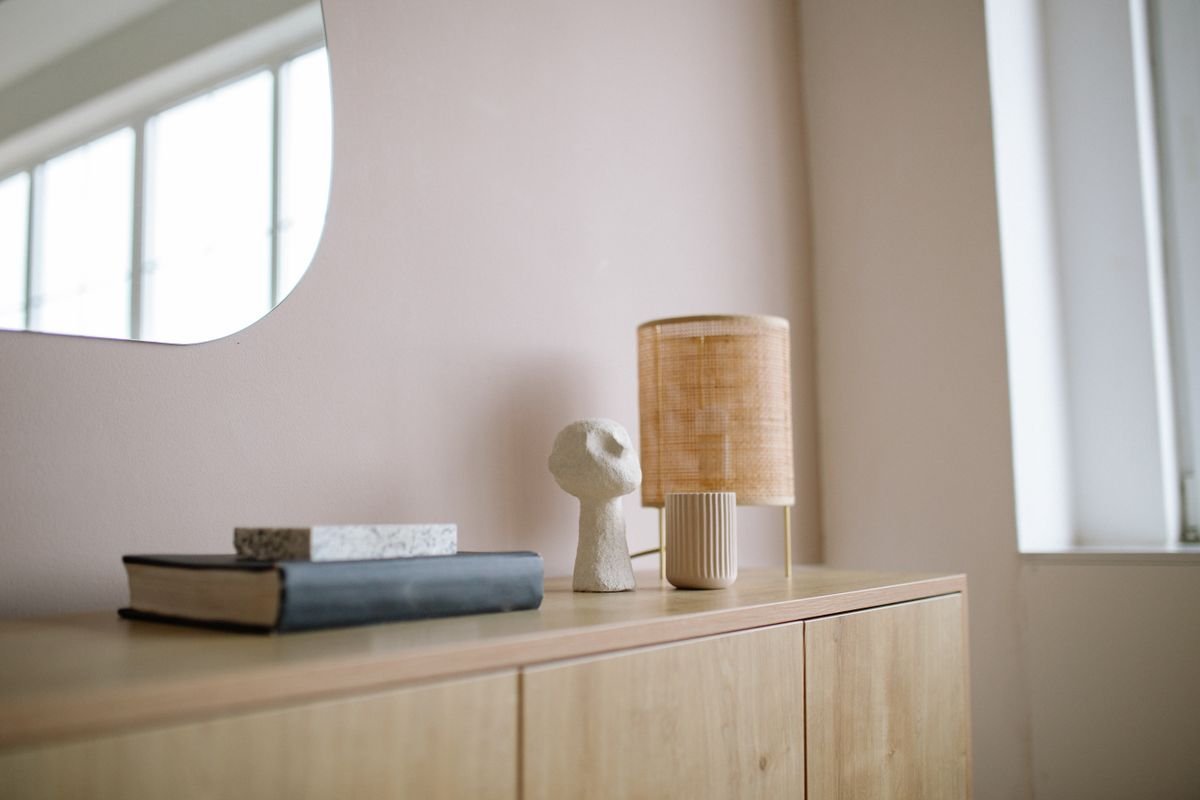
A pooja corner needs very little to feel complete: a diya or two, a small murti, maybe a prayer bell. The material matters more than the quantity. Brass has been the default for a reason. It holds up well against daily flame, and it develops a soft, uneven patina over the years that polished steel never earns.
Silver works well as a single statement piece rather than the whole setup. If you want a specific example, the silver-plated elephant murti we covered in our Diwali gift guide is built for exactly this: a small, considered piece that sits on a shelf or inside a mandir unit without needing a reason beyond being there.
Resist the urge to add every brass item you’ve been gifted over the years. A single well-placed diya pair and one murti say more than a shelf crowded with pieces that have lost their individual meaning. Add slowly, as pieces earn their place, rather than all at once.
Lighting the Space
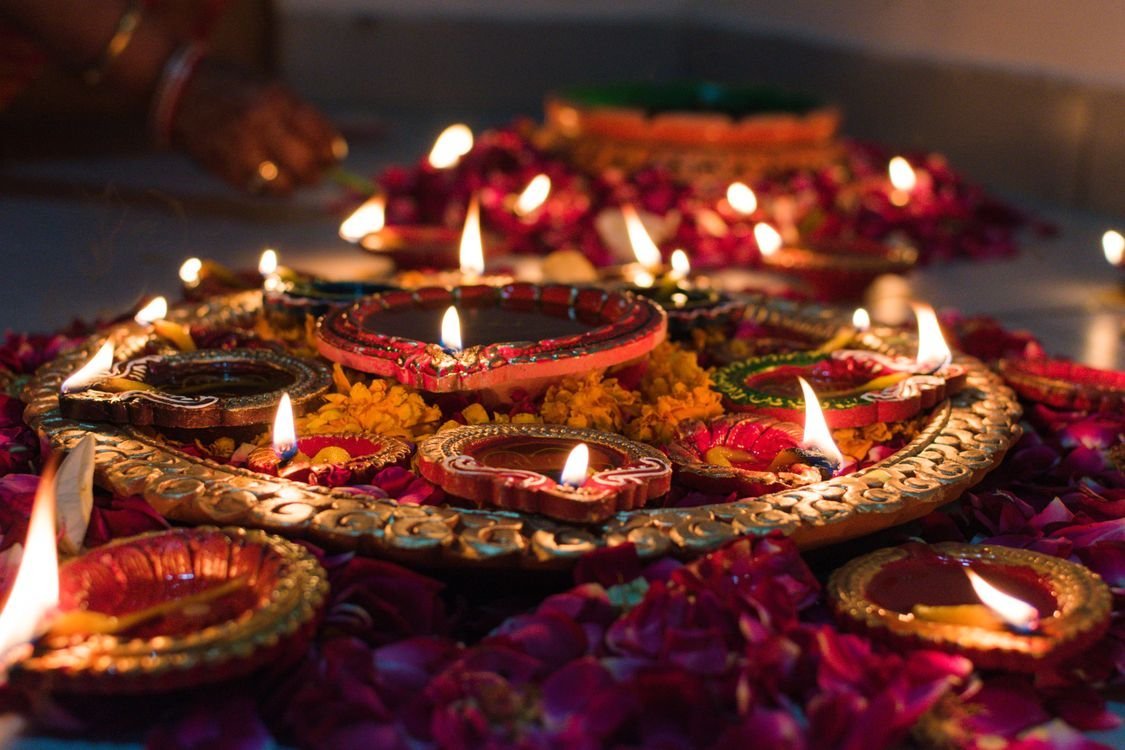
Light does most of the emotional work in a small pooja corner, so it’s worth getting right. For daily use, a small brass oil lamp lit for a few minutes during your morning or evening prayer gives the space its warmth without needing to burn all day.
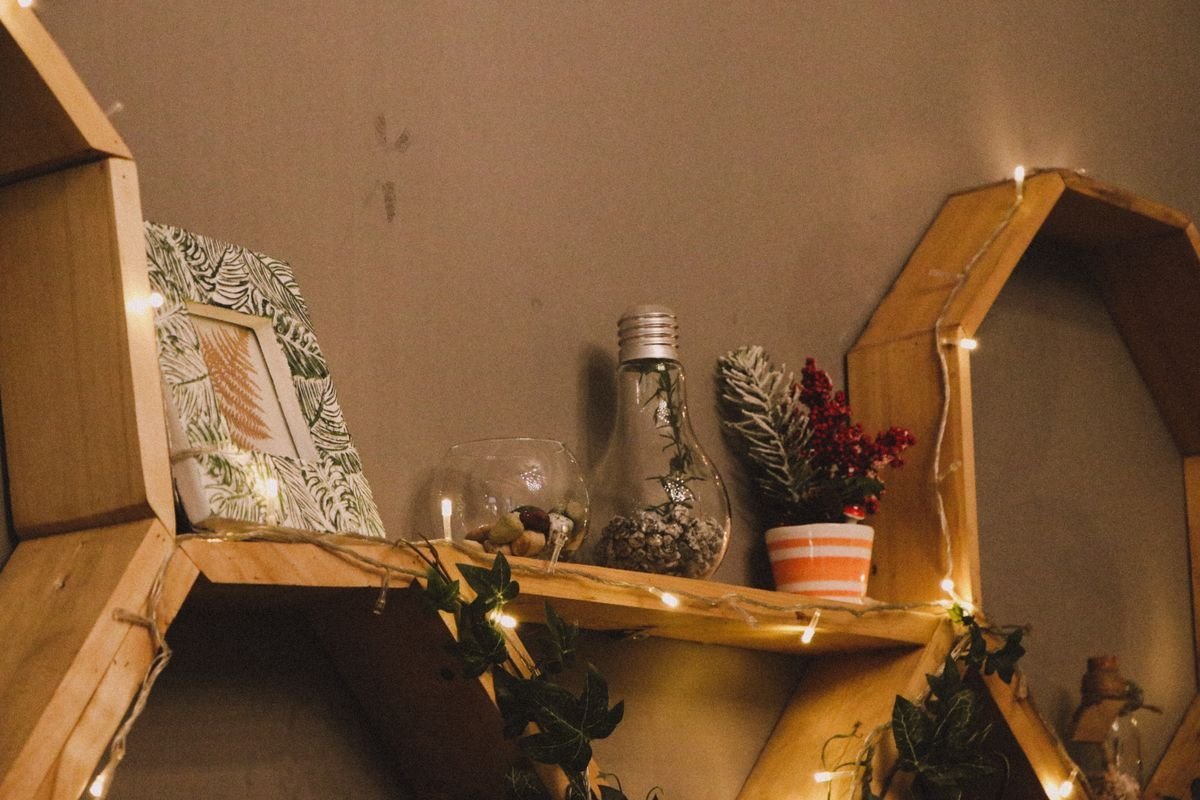
Around that, LED fairy lights strung loosely behind the shelf or along a mandir unit’s edge add a soft glow that works for festival décor and ordinary Tuesdays alike. If open flame feels risky in a small apartment, especially one with curtains or fabric nearby, battery-operated LED diyas are a safer substitute that still read as a diya from a few feet away.
Whatever you choose, stay in the warm range, 2700K to 3000K. Harsh white LEDs, the kind meant for a kitchen counter, make a pooja space feel clinical rather than calm. Warm light is doing half the job of making the corner feel sacred, so it’s not a detail to skip.
Keeping It Uncluttered
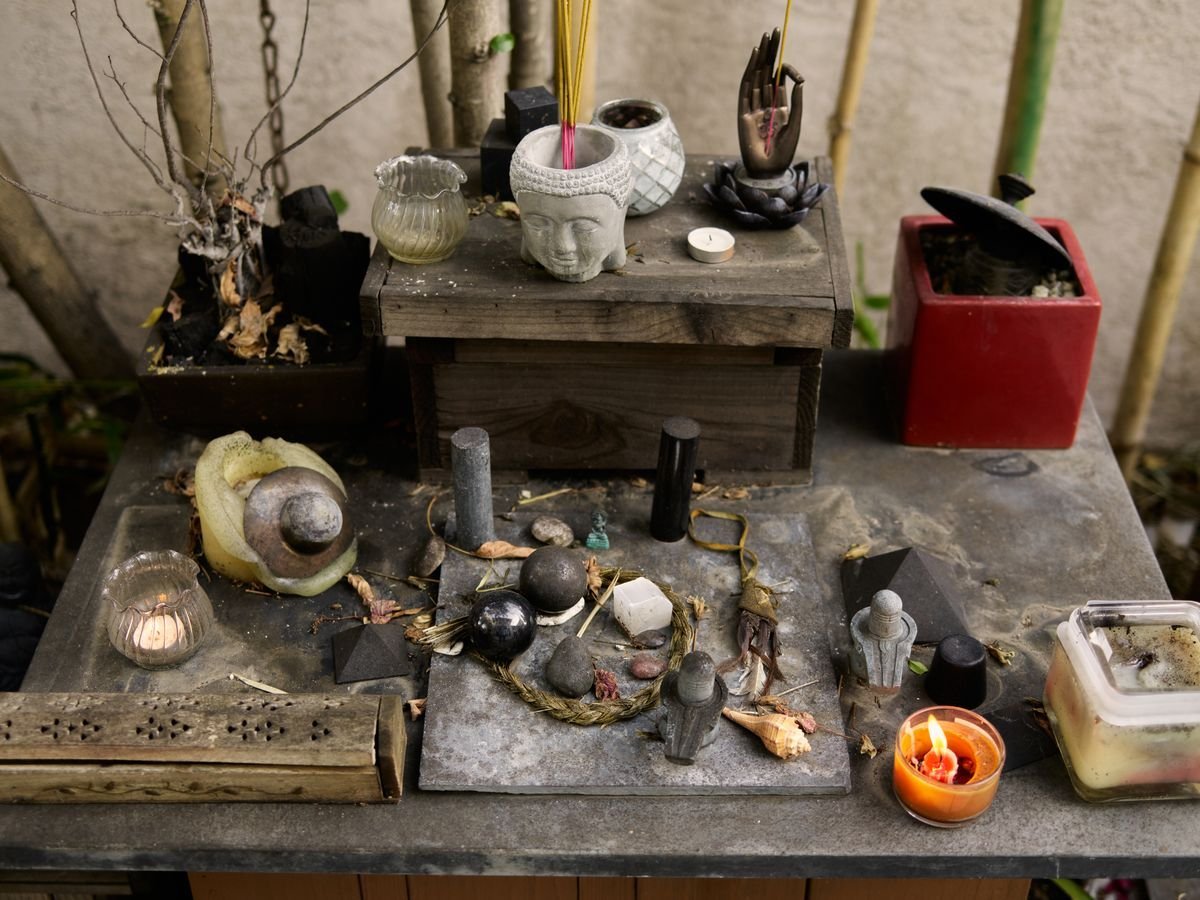
The best small pooja room ideas share one habit: fewer items, each one meaningful. A shelf crowded with every gifted idol, every leftover garland, and three different incense holders stops reading as sacred and starts reading as storage. Keep what you actually use, and let the rest go to a drawer or to someone who’ll use it.
Treat the space as seasonal rather than fixed. During Diwali or Navratri, bring out marigold garlands, extra diyas, and a bit more color. Once the festival passes, pare back to the daily essentials: one or two diyas, your main murti, a bell. This rotation keeps the corner feeling intentional instead of accumulating into permanent clutter.
If this kind of pared-back thinking appeals to you beyond the pooja corner, Organizing Without the Overwhelm covers the same philosophy for the rest of the house: small systems, maintained often, rather than big ones you dread resetting.
Making It Modern Without Losing Meaning
If you grew up with a parent’s or grandparent’s pooja room, heavy wood, dense with decades of accumulated items, it’s tempting to think a modern version is somehow less devoted. It isn’t. A clean marble ledge, a strip of light wood, and two or three brass pieces placed with care carry just as much meaning as a room three times the size.
This is usually where the shift happens for women setting up their first home. You’re not obligated to recreate your parents’ setup. You’re building a practice that fits your own space and your own pace: white marble or a light oak shelf against a plain wall, a single brass diya, a small murti you chose yourself rather than inherited. That’s enough.
Modern doesn’t mean minimal in the cold sense. It means considered. A pooja corner with three pieces you chose on purpose will always feel more sacred than one with twelve you never really looked at.
Texture does a lot of the work here. A plain whitewashed wall behind the shelf, a woven jute mat underfoot, a strip of warm wood against cool marble. These small material choices make a pared-back pooja corner feel deliberate rather than unfinished, which is usually the difference between a space that feels minimal and one that just feels empty.
A Good Time to Start
Navratri and Diwali are both close on the calendar, which makes the next few weeks a natural moment to try a few of these small pooja room ideas for yourself, whether you’re setting up a new corner or refreshing one you already have. Shops and marketplaces fill up with diyas, garlands, and small murtis this time of year, which makes sourcing easier than it is in a quieter month.
If you’re shopping for someone setting up their own space, our Diwali gift ideas for home roundup has a few pieces, including a silver murti and a few lighting options, that work well for exactly this kind of setup.
A pooja corner doesn’t need a dedicated room, a large shelf, or a full set of brass to feel meaningful. It needs a quiet spot, a few considered pieces, and the habit of showing up to it daily. Start with one shelf and one diya if that’s all you have room for. The rest can be added slowly, as it earns its place.
For more on building a home that feels calm and complete without excess, Decor That Feels Like Home is a good place to go next.
1 thought on “A Pooja Corner That Fits Your Home: 6 Small Pooja Room Ideas for Modern Spaces”
Comments are closed.